
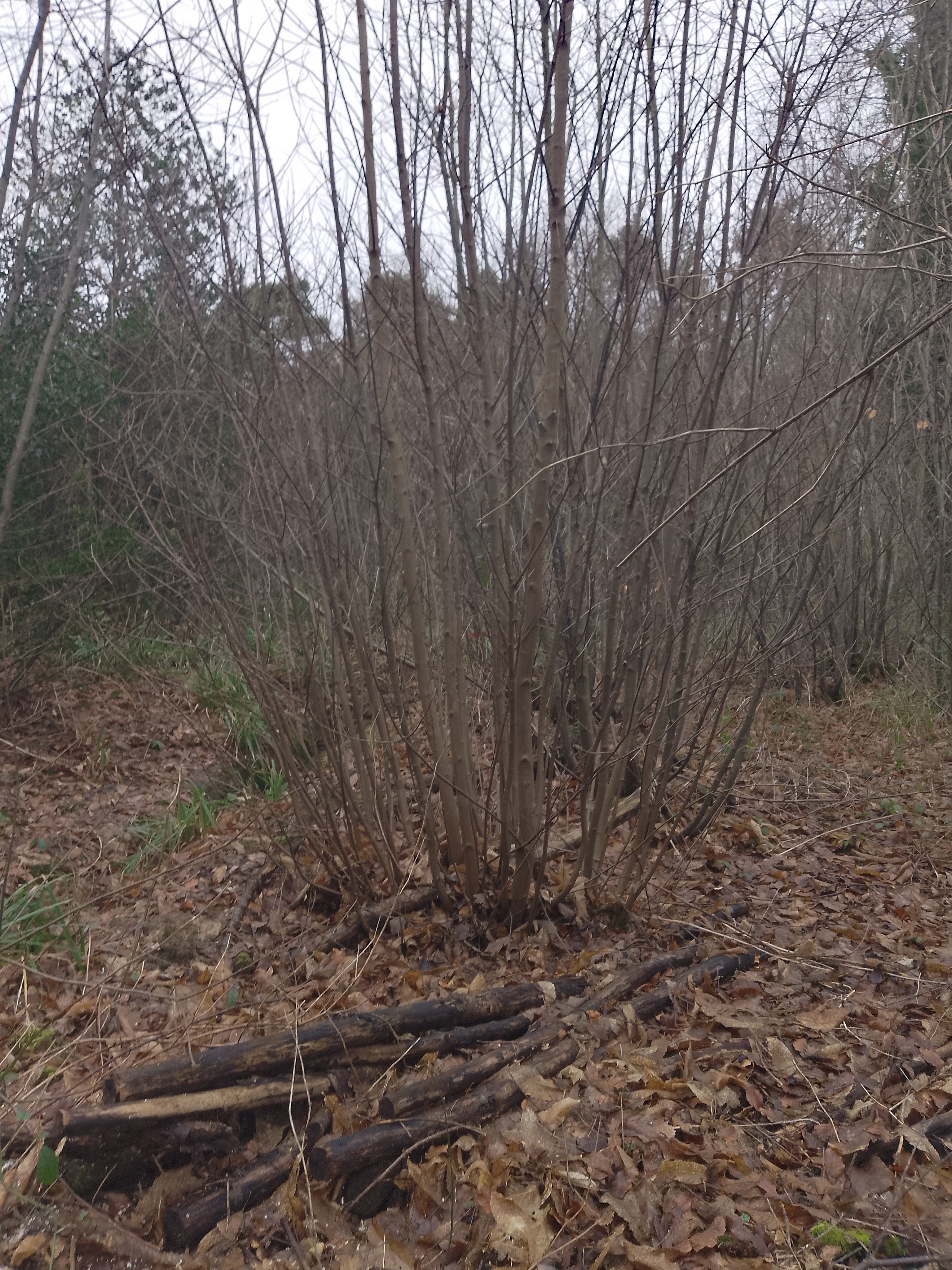
“To be without trees would, in the most literal way, to be without our roots.”
— Richard Mabey, Beechcombings: The Narratives of Trees (2007)
“He that plants trees, loves others besides himself.”
— Thomas Fuller, Gnomologia (1732)
“I started off down the ride from Deer Path to the moat, with the rain rat-a-tat-tatting on the hood of my North Face jacket. I passed the plantation full of birch, rowan, oak and cherry, squelching my way along a waterlogged track past the chestnut coppice. In spring time this place is a riot of bluebells, but now there is a different energy. A line of mature beeches-a hedge once undoubtedly-towers over the coppice, dark sinewy limbs and muscular trunks boasting their effortless majesty , reaching out with jade, amber, bronze and caramel pennants to taunt the spindly chestnut lances across the ride.”
-Jim Jones More Belties and my Autumn Urges (2010)
Living in Surrey and Sussex as I have over the greater part of my life, it’s hard not to become acquainted with a certain type of woodland management known as coppice, and to feel a connection with hazel and sweet chestnut which are two trees most commonly found in coppice woodlands. The quote above from a very early blog of mine is from a few passages where I explore the worked chestnut coppice behind my then home in Haslemere.
Richard Mabey’s quote suggests trees are of critical importance to humans. Indeed, without them we would not have oxygen to breath. Despite the scientifically proven importance of trees, tree cover loss has been rising in recent history, from 13.4 Mha of tree cover loss in 2001 to 28.3 Mha in 2023. While trees do provide environemntal and economic benefits, both Mabey and Fuller’s quotes point to the importance of a more intangible relation to trees and forests. Our Trees and Woodlands are vital to our sense of place and our own indentity. To get a sense of the cultural importance of trees, read this post Rebecca Solnit on Trees and the Shape of Time by Maria Popova on her site The Marginalian. Also just pop ‘Trees’ in the search box and see the delights that await you what comes up!
Humans came from the trees, so it isn’t surprising they still inhabit a large portion of our ancestral memory. In ecological terms, our evolutionary niche is as a forest dwelling species. In my last blog Black Mountains and Beyond I wrote about niches- the set of environmental and behavioural conditions in which a species thrives- and the idea of affordances. As as a reminder an affordance is something-an object, a behaviour, a set of circumstances- that offers opportunities for action. Dave Snowden of the Cynefin Co shares the metaphor of bringing a football or some skipping ropes (okay, more likely a Nintendo switch these days) to a children’s party and watch as otherwise chaotic behaviour coheres into patterns of organisation. Clearly trees are species that have created niche, or an affordance, for humans to exist and thrive.
Species like chestnut have also been the foundation of woodland economies in Europe until the industrial revolution, so I was delighted when I had the opportunity to ‘follow the chestnut’ recently as a connection between two initiatives that, like the Black Mountain College in Wales I wrote about in my last blog, can be seen as affordances for the shifting of patterns of community organisation towards social and ecological regeneration.
For a few years now I have been tending a working relationship with a friend who I met through my PhD supervisor and until very recently I only met only online. I first became aware of Dr Jane Myat, a GP at the Caversham Practice in London, because of her interest in Spooncarving as an element in social prescribing. I soon became a member of Jane’s dynamic but relatively short-lived online collective ‘The Midnight Kitchen’ and its offspring ‘Arete’-The International Craft Collective. To call Jane a GP misses the incredible breadth of work and social network that she affords. It is to confuse Doctors with sickness rather than wellness, and reduces the idea of Wellness with its many layered holistic meanings and muti-disciplinary approaches with not being sick.
Jane introduced me to Global Generation, a Camden-based organisation that co-creates community gardens through which they foster education in urban food growing, carpentry, cooking and eating together with dialogue, story-telling, creative writing, silence and stillness. Usually gardens are built on sites with short-term leases but GG have recently acquired a long lease at The Triangle on York Road and are using the build process as a learning tool, showcasing different ways of building sustainably, with the majority of materials being either natural or re-used, saving materials that would otherwise be construction waste.
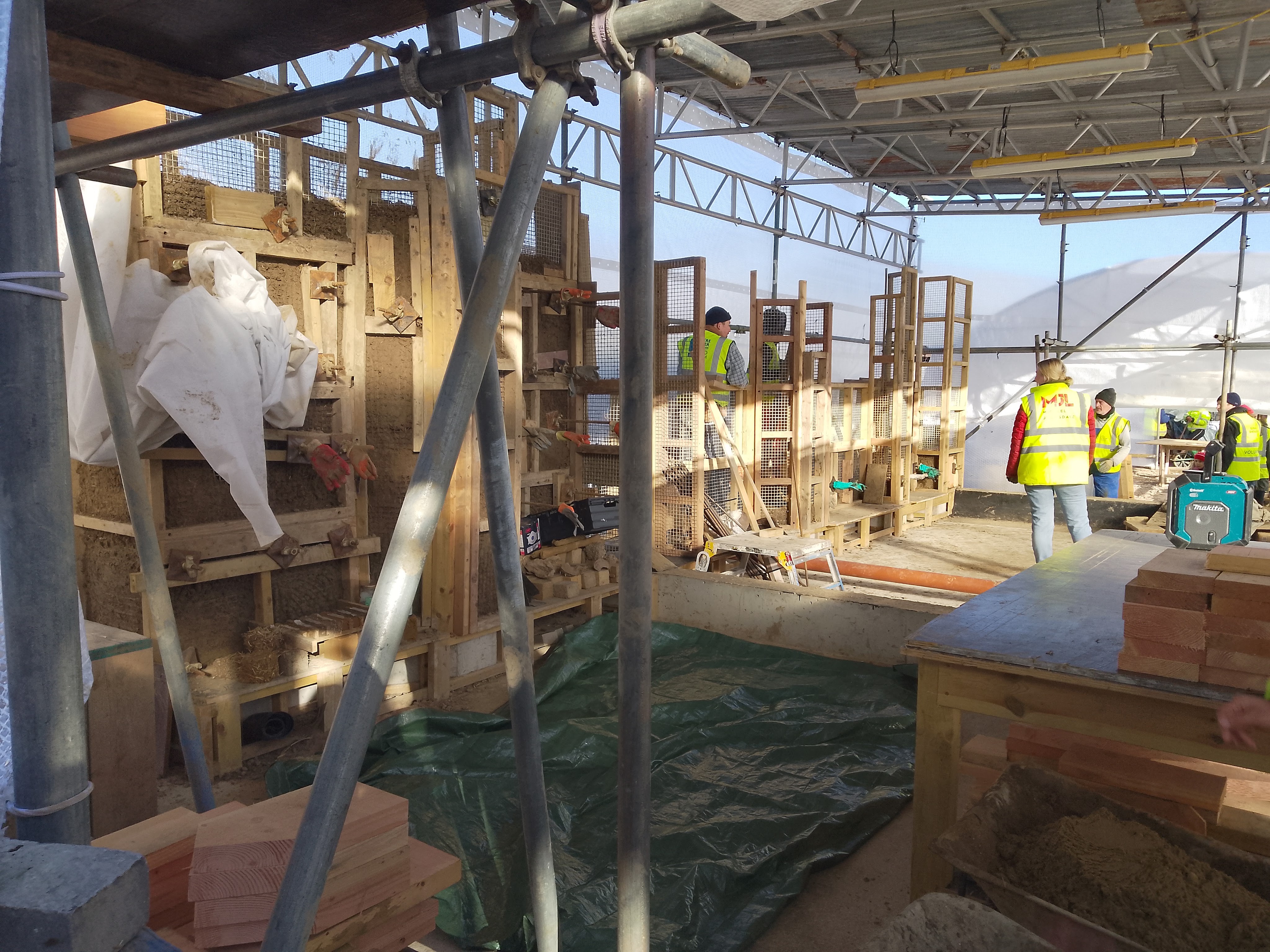
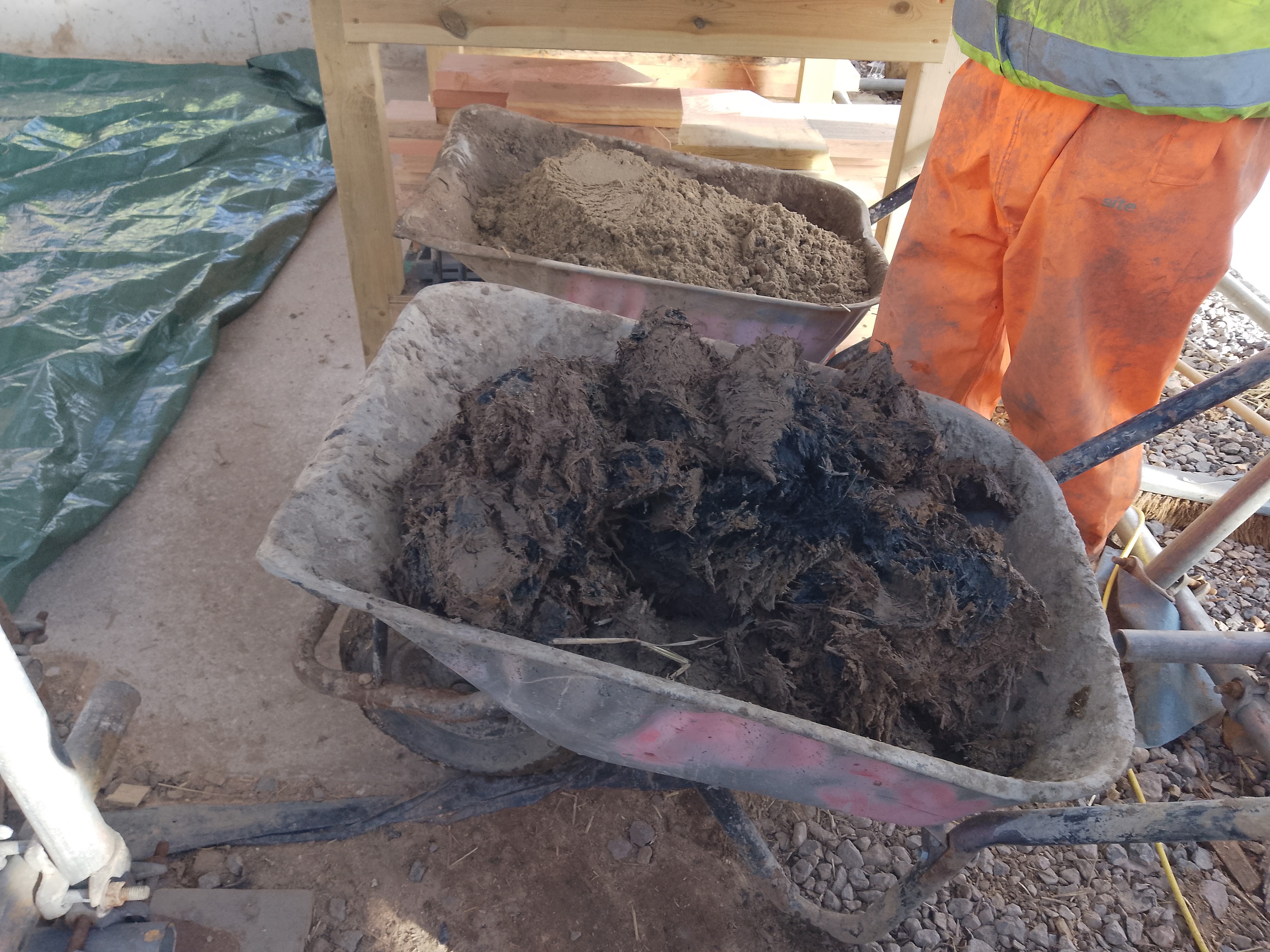
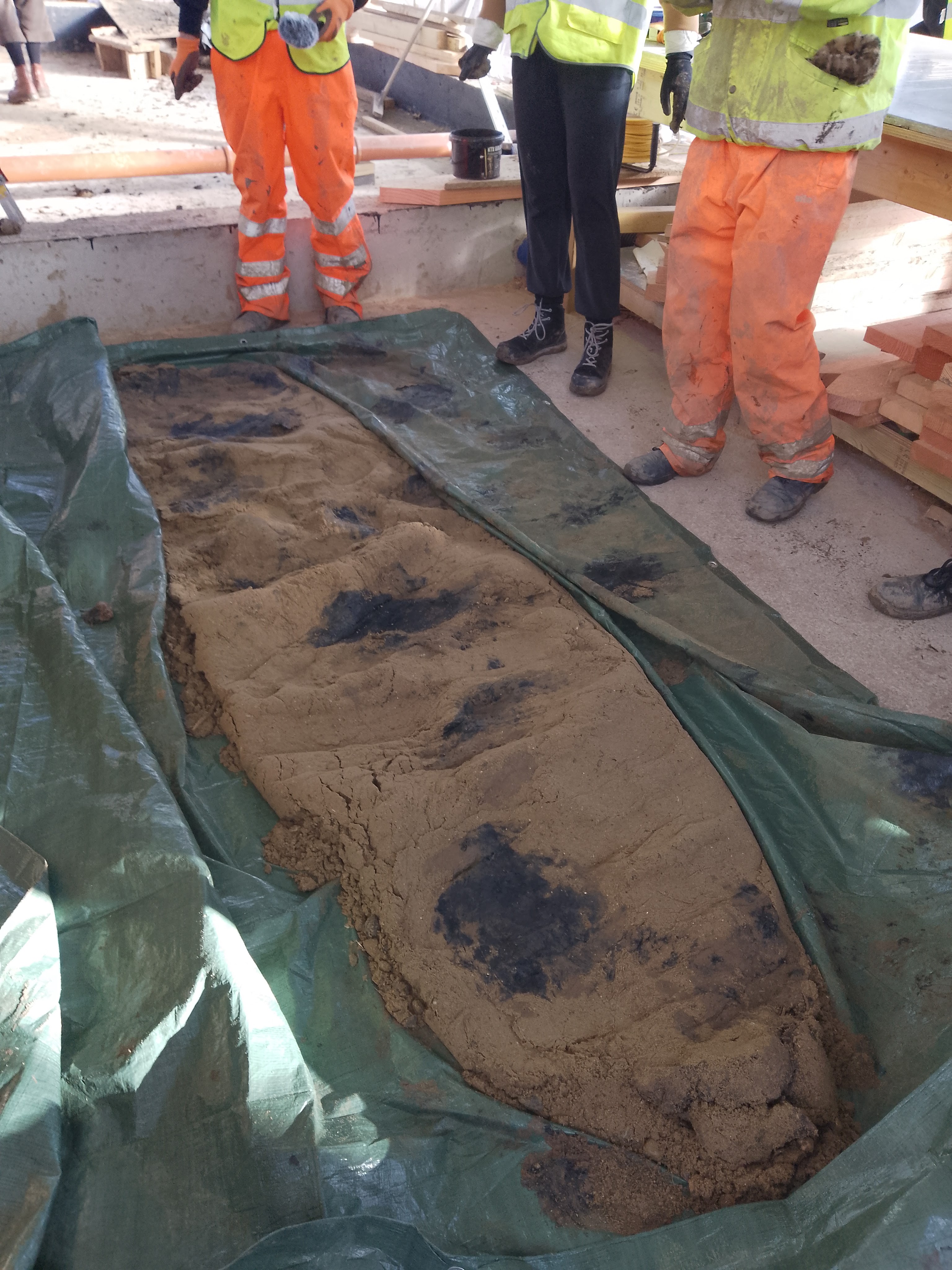
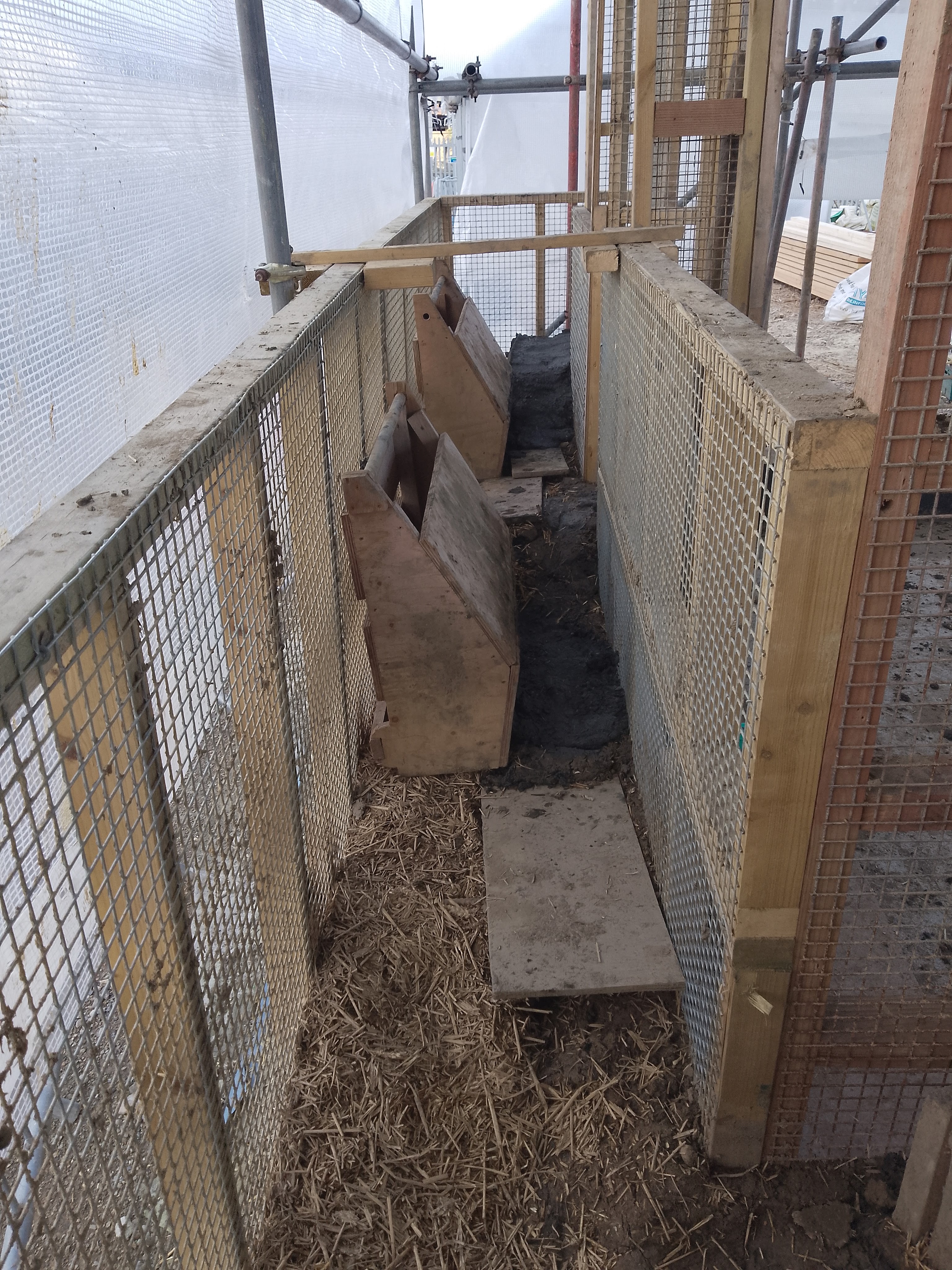
Recently I attended a Community Build Day with 40 other people, some of whom were CG Trainees, and learned how to build using cob and chestnut shakes. Cob building is one of the oldest building processes and uses a mixture of clay, sand, straw and water. Two types of cob were in use: a lighter mix of straw, clay and water for the exterior insulation and an inner heavier mix of staw,clay,sand and water. There was an opportunity to get involved in each stage of the process from mixing straw and clay for different cob mixes, folding in the sand for the heavy cob and stepping in to the cage to build the wall, pummelling the cob in with mallets. Mixing in the sand was perhaps the most fun. Clay and straw were layed in a long sausage on a tarpaulin then covered with sand. The tarpaulin is then pulled over, dance music is turned on and volunteers jump up and stomp to the beat!


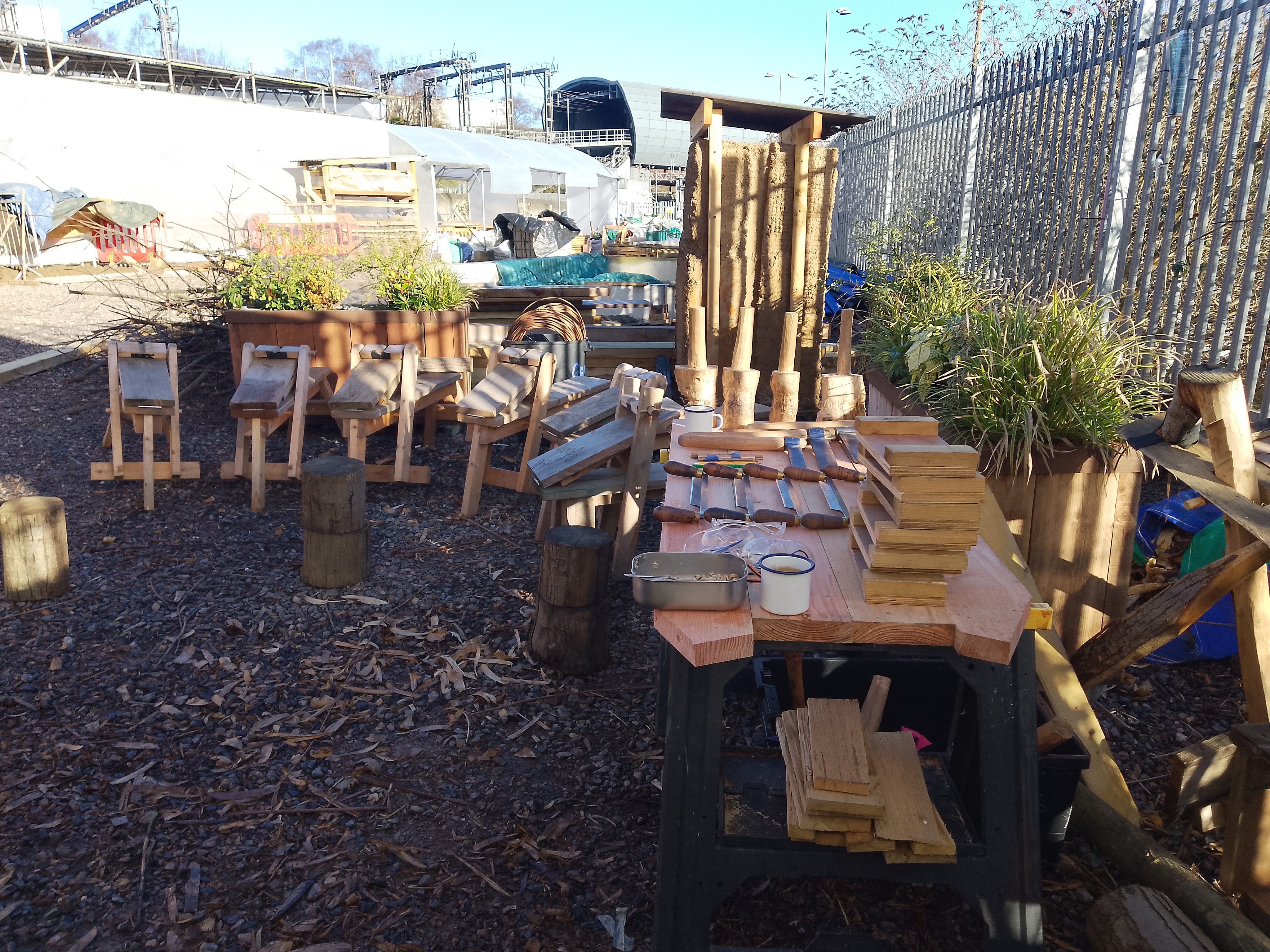
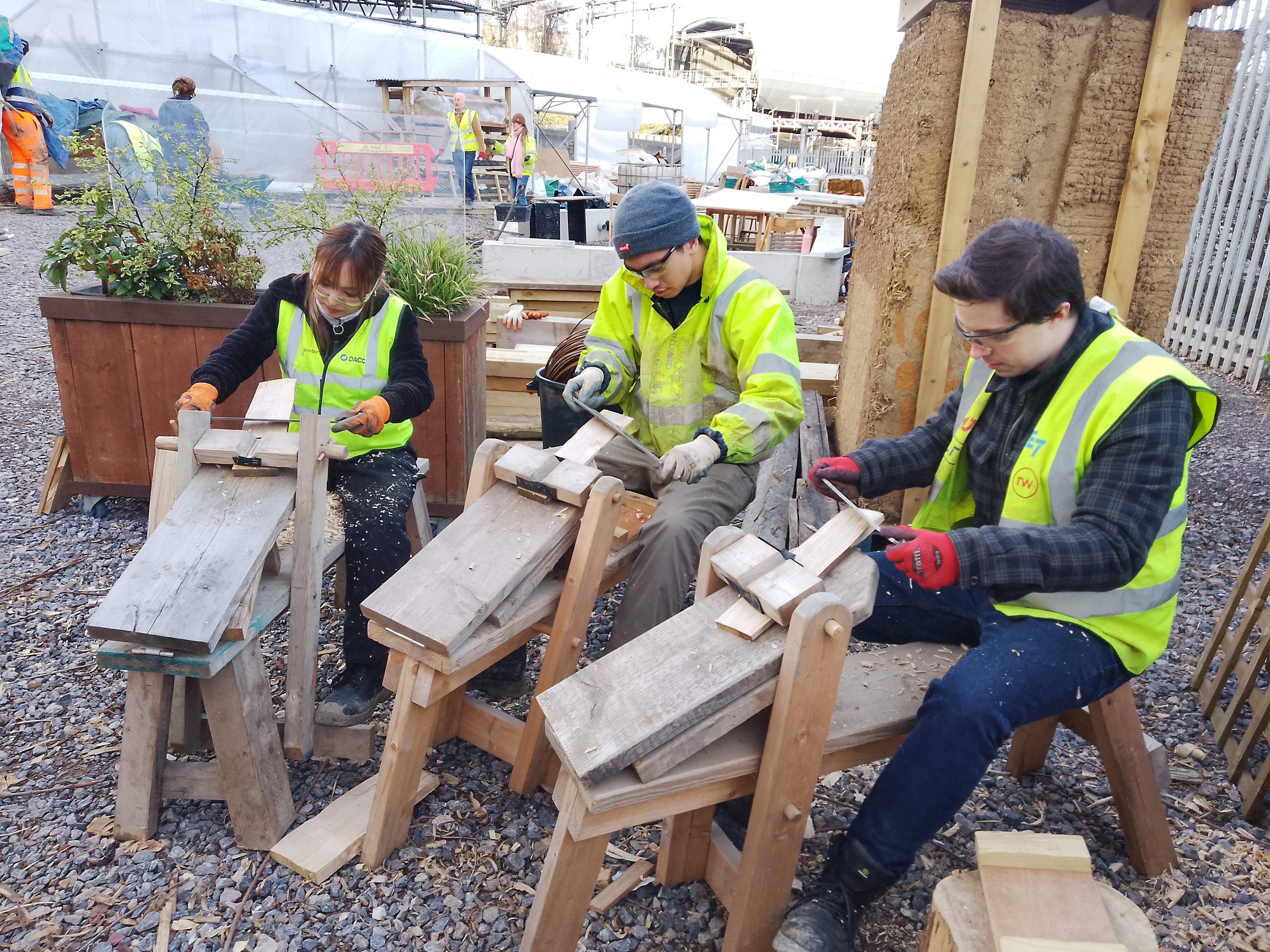
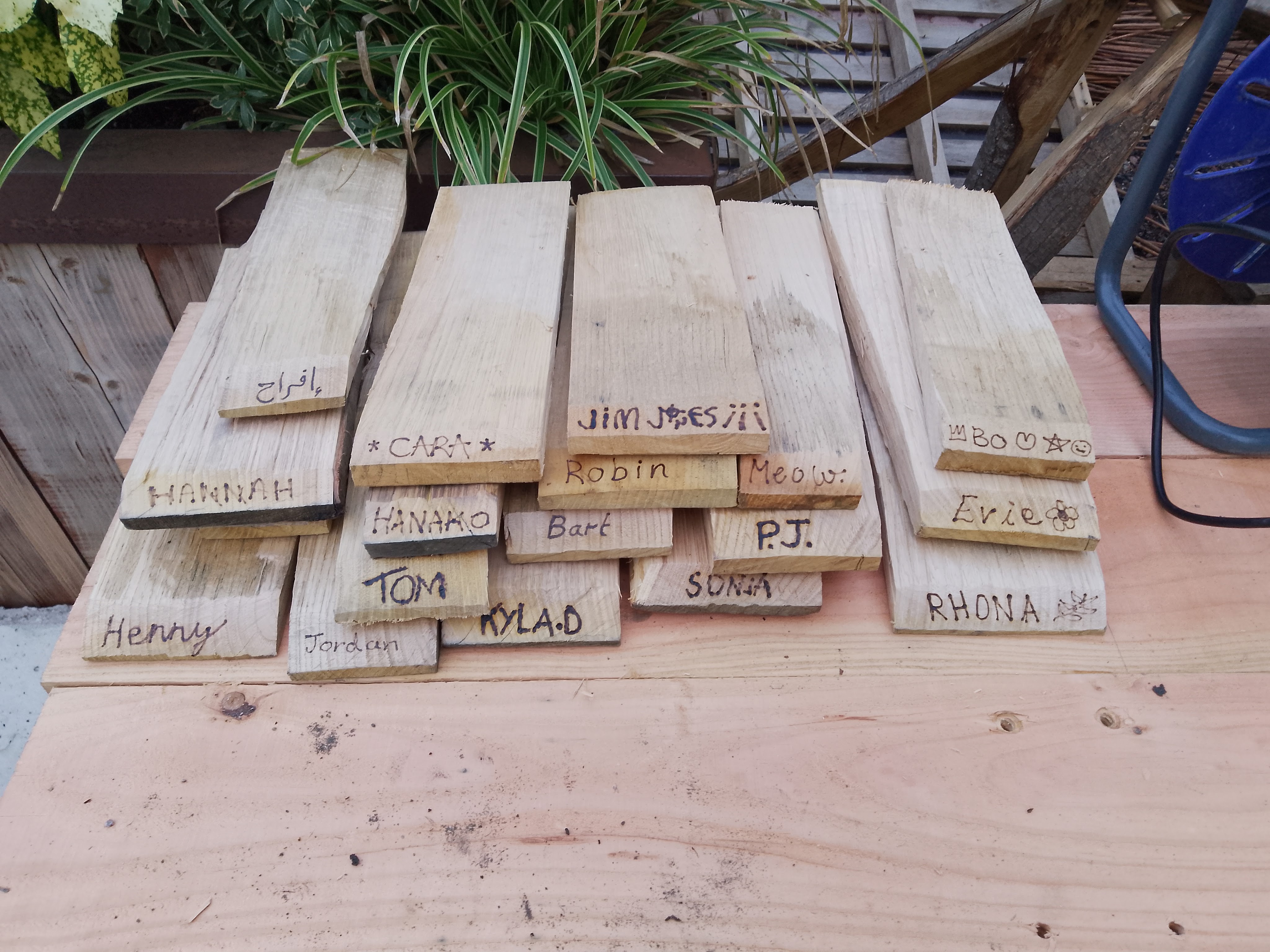
While some volunteers tended to the cob building others were busy with the making of shakes to clad the timber-frame build. There is a great video showing how shakes are made here Sweet chestnut logs are first cleaved using an axe-like tool called a froe. The blanks are then shaped up on the shave horse using a draw knife. I also helped prepping stakes on a shave horse which will eventually be used for making chestnut hurdles which will be installed around the site perimeter to soften the look of the steel railway fencing.
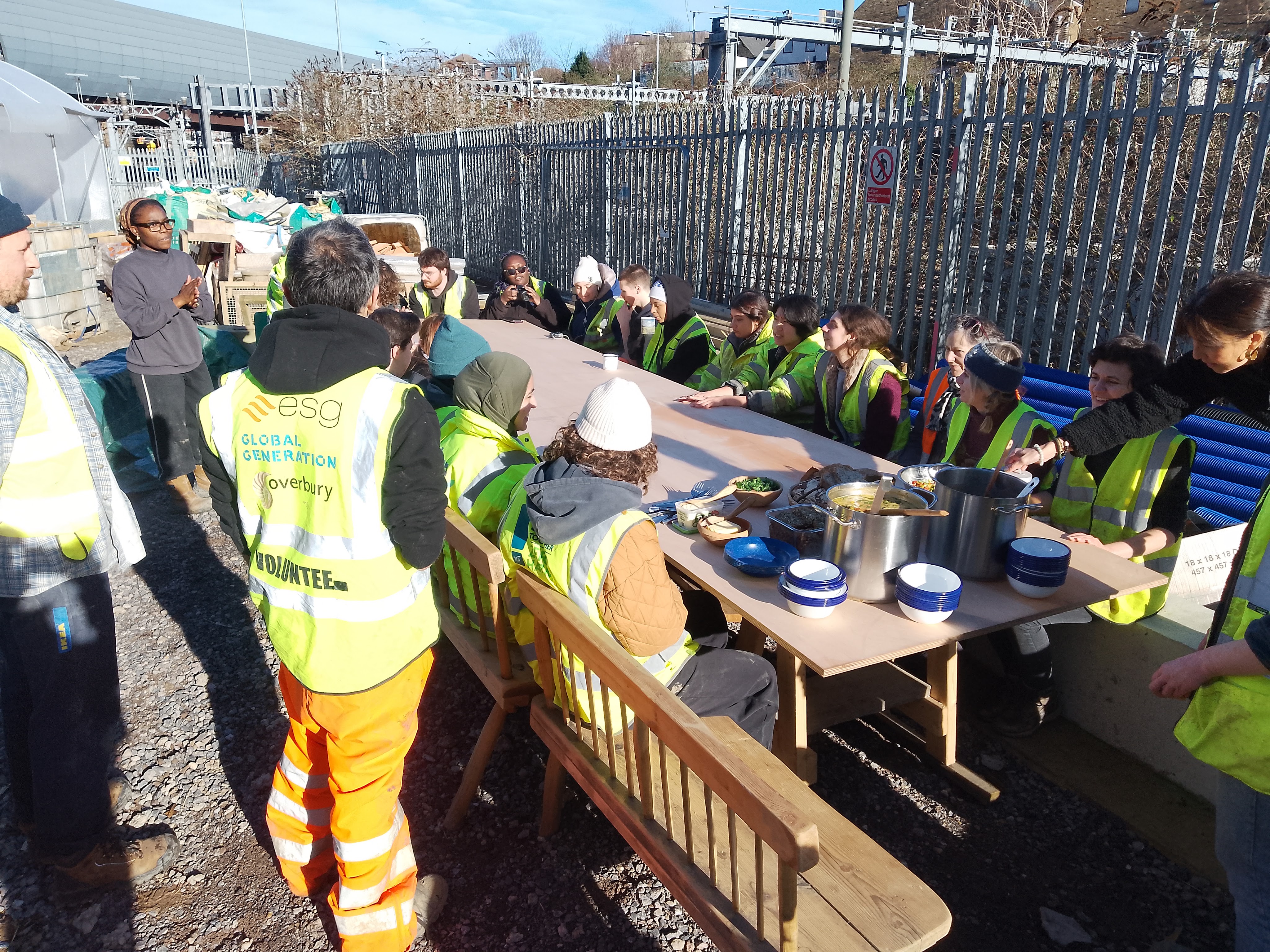
It was an amazing day, with a feeling I hadn’t had since leaving Mount Wolfe Farm, or the last SpoonMoot, Scything Gathering or Fulcrum Skillshare I attended. I was amongst people who were having a good time where people were learning new skills doing something that involved body and mind. It was cold but thier was glorious winter sunshine that lit up rosy faces and sparkling eyes. People were eager to share the stories of what had bought them to volunteer: architect students, families on a day out, trainees looking to learn new skills for a career in sustainable building. We were definitely helped by a tasty lunch cooked by Jane.
On my way up from Sussex to the GG site I was thinking about community, feeling sorry for myself about being disconnected from the burgeoning skills community I was part of in Canada. There were questions in my mind about what it means to be in community, but also what it feels like. As someone who struggles a lot with overthinking and often feels trapped in the ‘back room’ of my mind, I wanted to know what embodied community felt like. How do we sense community in our muscles and sinews and bones rather than in the fuzzy electrical impulses of our imagination? At the end of the day I shared this with my fellow volunteers and offered that the feeling of an aching body but an improved posture and an inexplicable sense of belonging that soothed muscle tension was in part what community felt like.
So I mentioned the chestnut used for shakes and stakes. A conversation with Nick Booth, coordinator of the woodworking aspects of the site build revealed that he was based out of Wilderness Wood in East Sussex. Hearing Nick talk about the place, and the fact that it was the origin of the chestnut we were using, resolved me to visit, and lo if there wasn’t a Stewardship Saturday, the first of 2025, happening two weeks after the GG Build day. And it was on 1st February so a great way to celebrate Imbolc /St Bridgit’s Day.
I admit I was expecting perhaps a small car park at the edge of the woods, and a trail to a couple of bodging structures, so I was surprised at the size of WIlderness Wood. Driving in under you feel enveloped by the trees before being greeted by a cluster of buildings and barns. I’m immediately struck by the beautiful outdoor kitchen area, a sculptural feature composed of softwood rounds, and a serving hatch which is ready to serve me and other volunteers coffee as we assemble for the morning’s task. I immediately volunteer for Jake’s coppicing crew. We take off into the woods and spend the morning working the chestnut coppice, cutting poles some of which will find their way up to The Triangle.

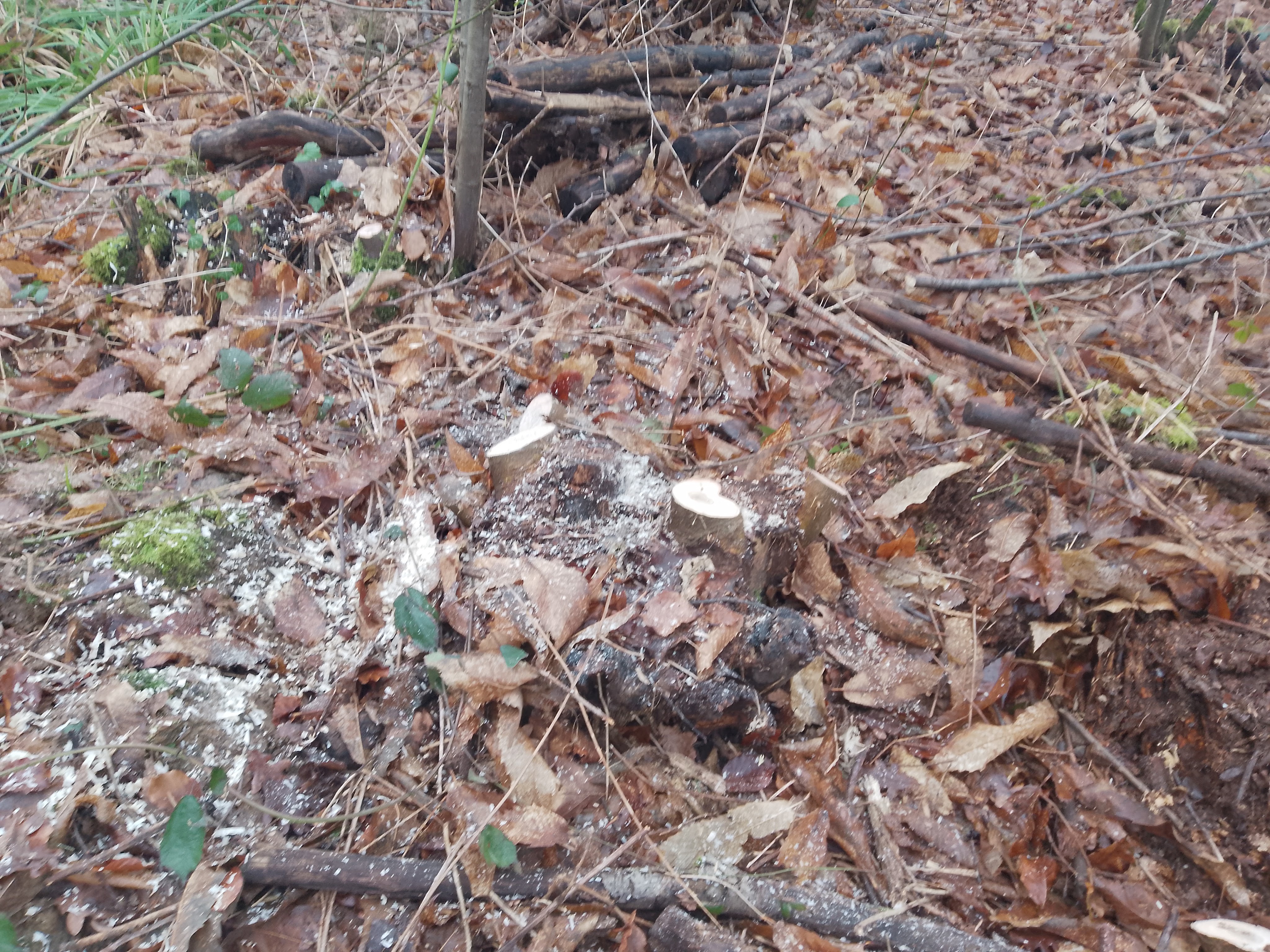
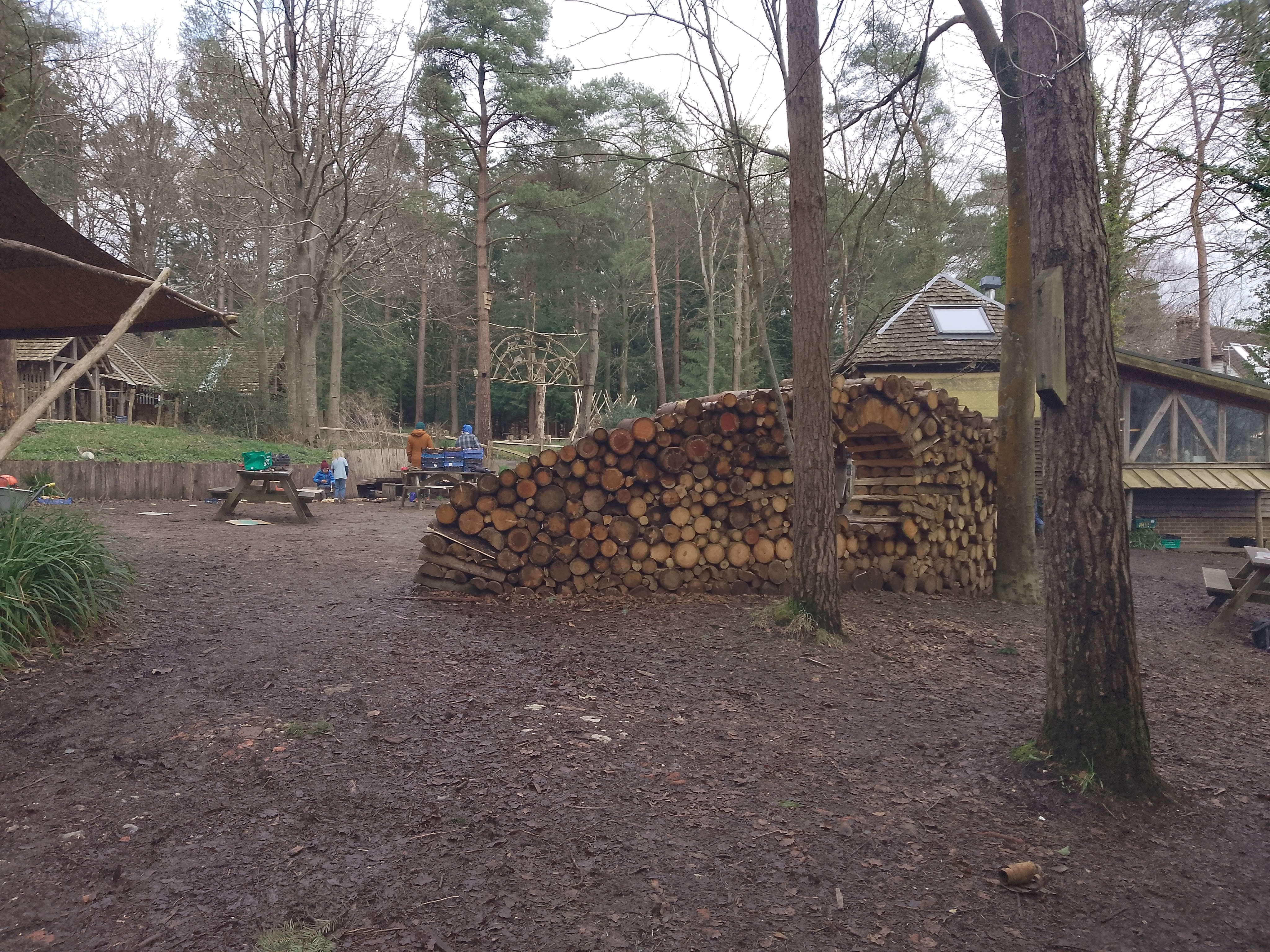

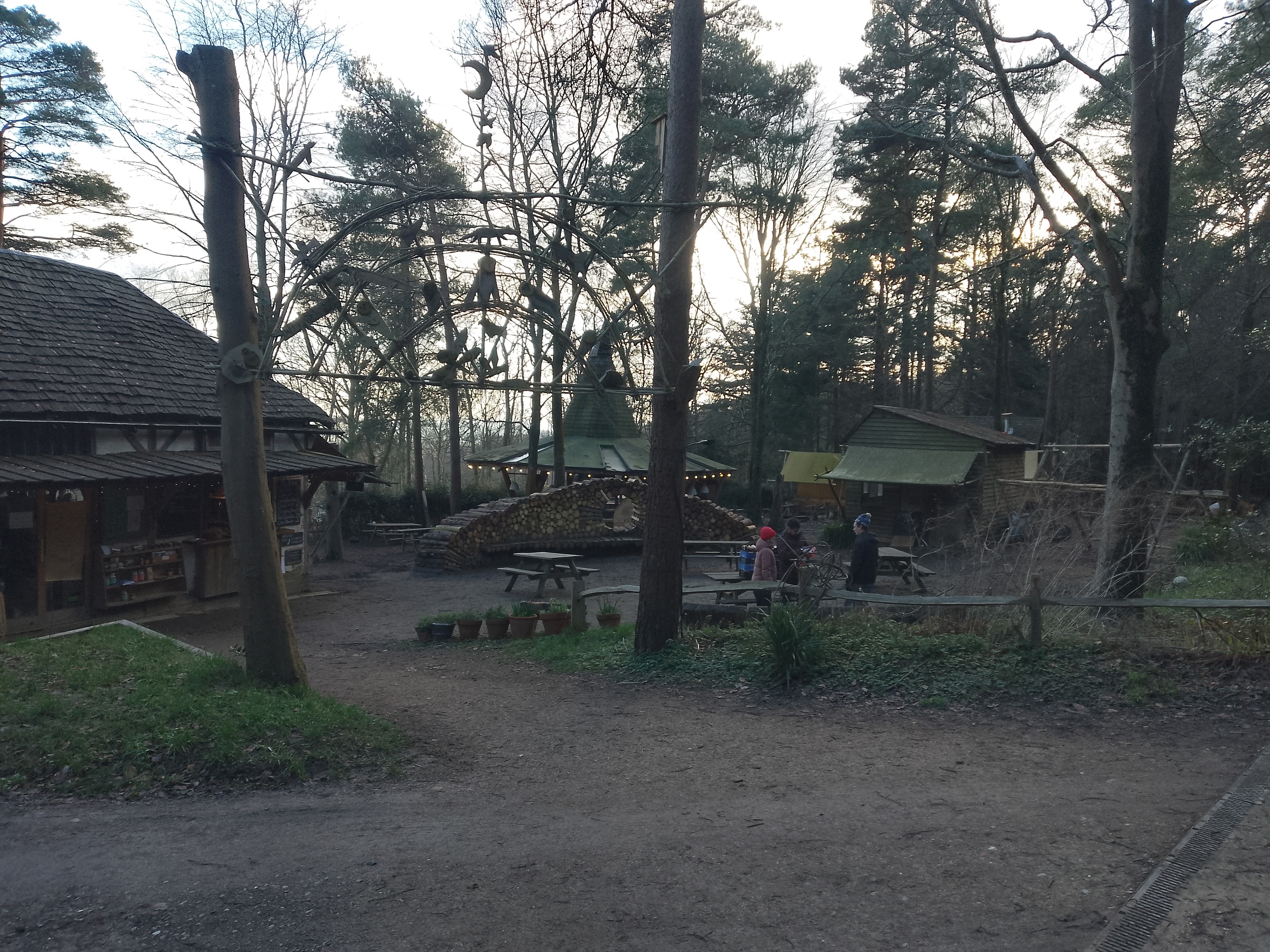


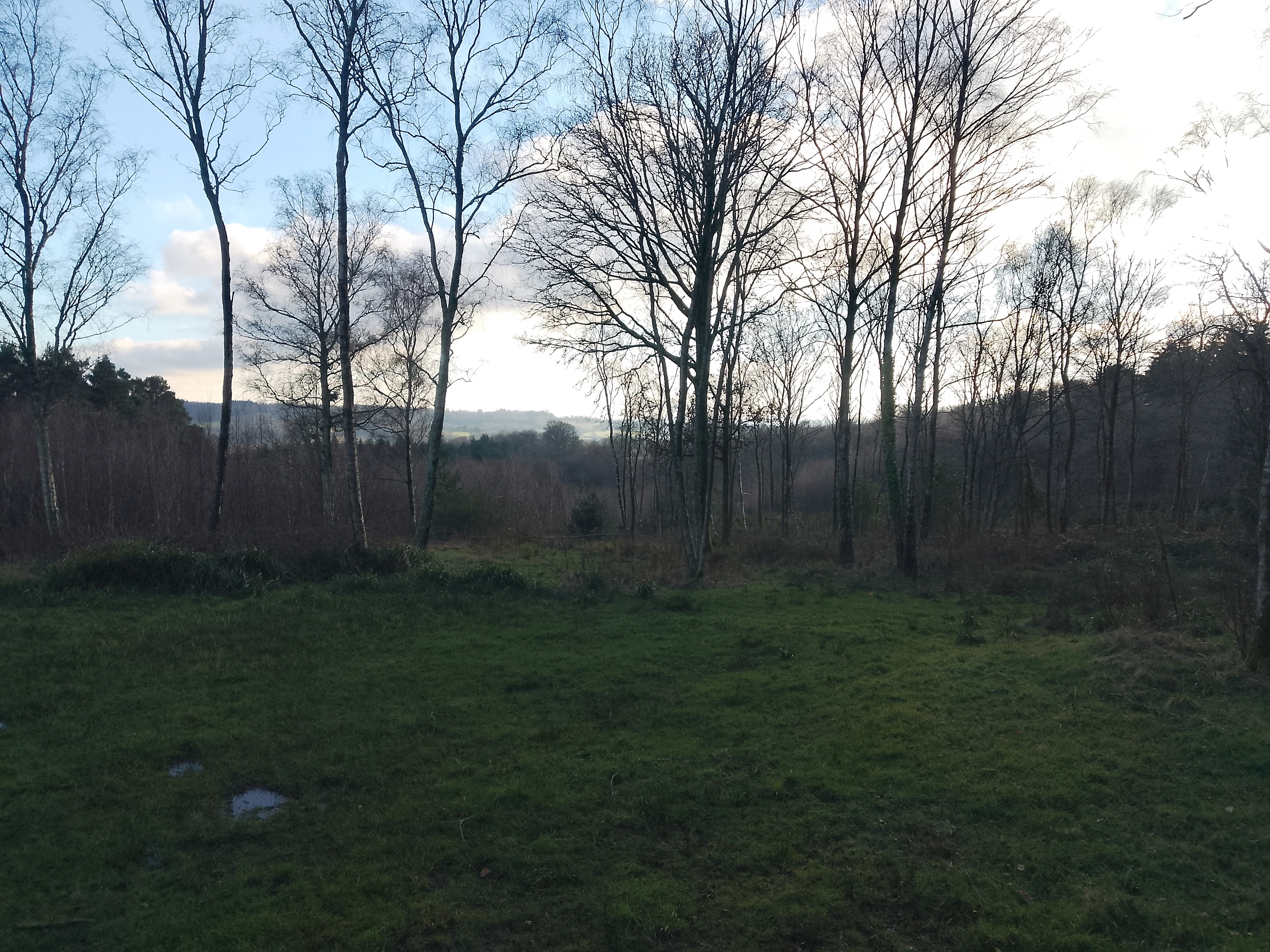
At lunch we were rewarded with a tasty squash soup cooked in the open air kitchen, and afterwards were treated to a talk by a local historian on the the history of the woods. Everuone was very friendly, and I began to learned about the breath of activities that have taken place in the Woods over their 10 year history. The 62 acre wood is base to many land-based livelihoods including Andrew Coates Woodland Products, Helen Squires Rooted Therapy and Dan Morrish Architects. Its also a place hosting many creative and educational enterprises and has an active community of members of all ages who participate in the stewardship of the woodland and are involved in creative projects.
Both Global Generation and Wilderness Woods are the types of projects that are essential to systems change. They are spaces for innovation where experiments in creating different kinds of patterns around community, wellbeing and land-based livelihoods can be tested. The test if there is one in the success of these types of social experiments is how much they shift individual and social behaviour into new patterns. For instance are they affordances for different forms of consumption- a new market for buying vegetables or place to purchase a bushcraft course- or are they shifting fundamental narratives about how people should build relationships with the land and each other.
I look forward to getting back to both of these projects and also ‘following the chestnut’ (and other trees) to find other affordances for wayfinding in the adjacent possible.
 James T Jones
Leave a comment