Talgarth, South Wales.
This is my first blog in a while and is really just a collection of thoughts and ideas that have been surfacing, or have surfaced during this road trip, arranged in no particular order! Its going to be a bit fragmented while I get down lots of ideas to follow up later. There is a lot of change happening for me and new ideas I’m exploring including the emergence soon(ish) of something I’m calling RootSense, which is a formalization of the work I have been doing over the years in narrative ecology and working with tools such as Participatory Narrative Inquiry (PNI), Cynefin and more recently Warm Data, coupled with my skills/crafts work. My focus is very broadly “Being In Service to Life,” (with thanks to Nora Bateson for that inspirational phrase which has stuck with me).
I hope you will stay with me!
The Road Trip
Who doesn’t like a Road Trip? I’m writing this from the comfort of a luxurious sofa/bed in the annexe to a house about a mile outside of Talgarth.1 Through a couple of patio doors, a well-kept garden is soggy with rain. Beyond the trimmed, mixed-species hedgerows lies the bocage landscape (would love to know if there is a word for this type of landscape in Welsh) of southern Wales- hedgerows, small woodlots, hill farms, ponds and rivers and just out of sight the looming presence of the Black Mountains and the Brecon Beacons. I feel a connection to this landscape through frequent camping and walking visits with friends, although I haven’t been here for maybe 10 years or more. I also feel an ancestral pull to Wales because my family on my fathers side came Denbighshire.
I’m on a road trip with my friend Andrew Millward who is on ‘holiday’ from his work as a Prof of Geography at Toronto Metropolitan University with a mixed agenda encompassing some survey work, teaching, learning, and of course relaxing and soaking up the beauty of the British Landscape. I’m accompanying him this week on some adventures in Wales where we are visiting the Black Mountains College then heading to Oxfordshire to visit my good friend Nigel Adams and do some hedgelaying. All three of us plan on heading to a hedgelaying competition in Flintshire on Saturday so that Nigel can get some pictures of the local style for his upcoming book. Andrew is then off up to the University of Stirling to do a week of teaching, but then we will all meet again in Yorkshire for the National Hedgelaying Competition.
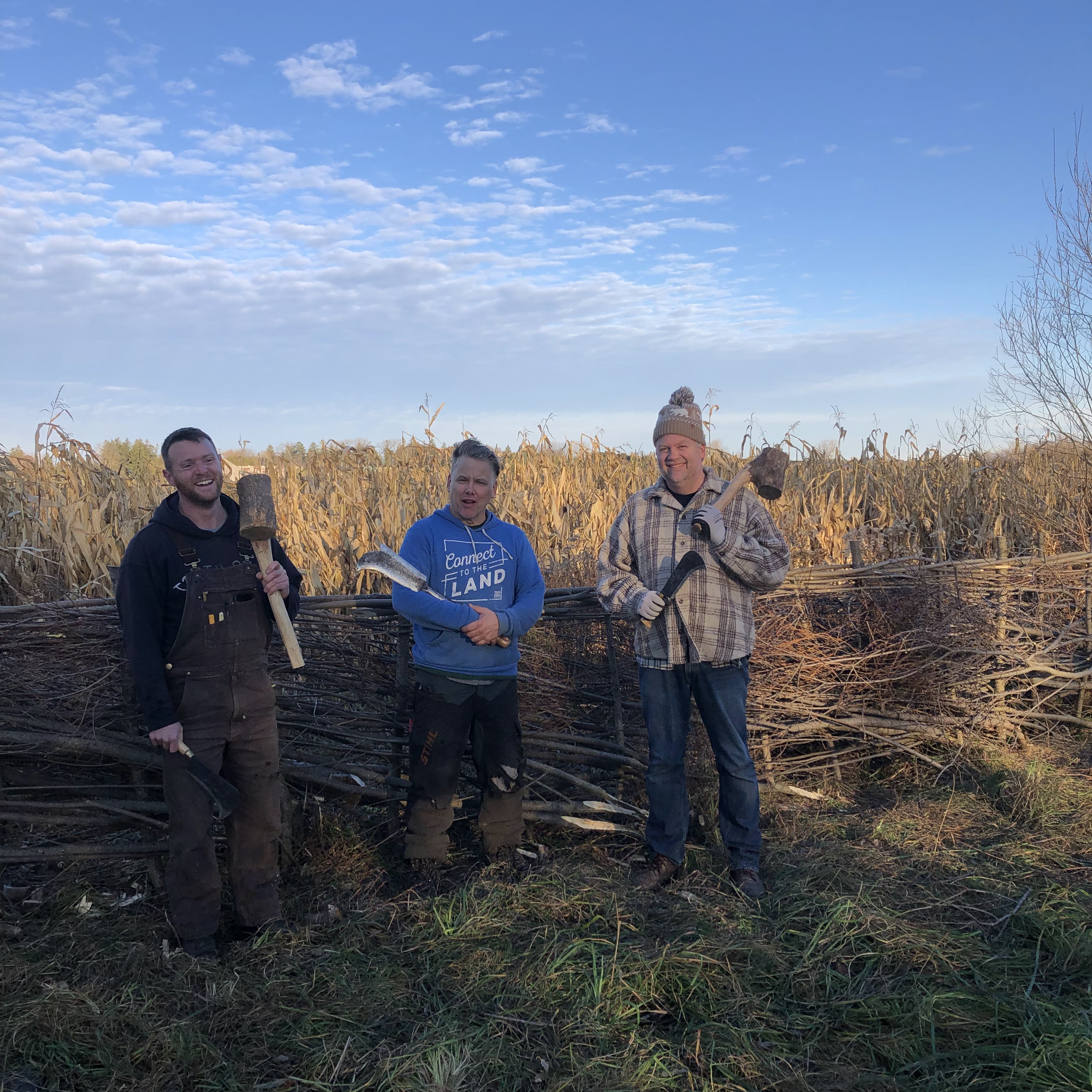
I first met Andrew Millward, a geography Professor at Toronto Metropolitan University, when he attended one of my hedgelaying workshops at Ignatius Farm in Ontario, where his wife Heather is the Farm Manager. Andrew took to hedgelaying with much enthusiasm and recognized the many connections that this rural skill affords- to land and work, to food and farming, to community, to health and to sense of place to name but a few. I’ve since been working remotely as a Teaching Assistant with Andrew on his undergraduate course ‘Decolonising the Map’ where I am delivering a few Labs to his students on shifting perceptions through Systems Mapping and Nature-Based Awareness.
Sensemaking
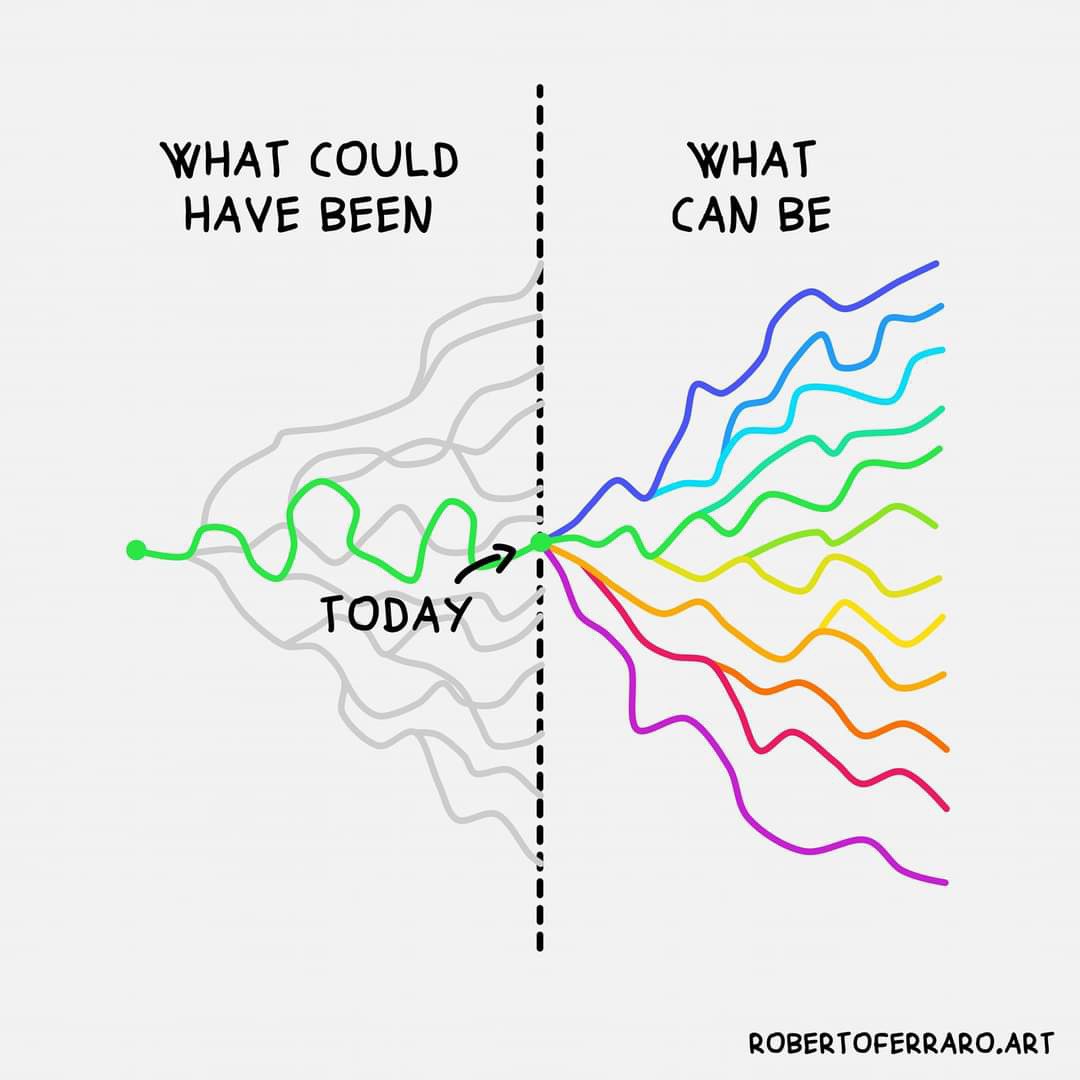
My work begins with sensemaking; I have a growing list of groups and organisations that I have worked with to help find clarity in the complexity of the world and begin to find a way to move forward. But a sensemaker doesn’t have it all worked out and must use his or her own tools as a practice frequently in life. I find myself in a space where I have made a huge choice in my life- to come back to England- which has seen the end of many pathways I was pursuing, but opened up opportunities I didn’t foresee. It’s a time of radical change, of acknowledging that goals I once held dear won’t now be met.
Mental Health
I have struggled on and off with my mental health for years, and have worked with different therapies which have helped in some ways and not in others. I have just recently started a 10 week course in Acceptance and Commitment Therapy (ACT), which I am finding very useful. The overall goal is to increase psychological flexibility, and one part of this is a refocusing on values instead of goals. Doing so seems to help me make sense of my life because for many different reasons I haven’t always been able to achieve goals, which has left me feeling psychologically fragile (I’m useless, not a winner!). Yet my goals have been consistently underpinned by long held values- building relationships and community, providing support, developing empathy for the non-human and natural world. I’ve started using the encompassing phrase of ‘being in service to life’, (borrowed from Nora Bateson _/\_)
Blogging
I haven’t felt the urge to blog in a long time, especially since I can produce a longish Instagram post which a lot more people will take the time to read. But in the last few weeks and especially the last few days I have felt the need to renew this as a practice and not necessarily because it will be read. However, if you are here reading these words, I am very grateful and please do comment below if you enjoy them. I love writing but often hold back because I imagine I don’t have anything to say.
Overcoming this blockage- of being an imposter in a world where everyone is a judge of ability-is part of work I’ve been doing for years around my mental health.
Affordances
I love that this word contains a ‘dance’.
There is that word afford in that sentence above which I’ve highlighted. I have been thinking a great deal about that lately. In a humorous sense it’s because my lack of a secure income after my PHD funding ended and my recent move back to the UK means I can’t afford much and I am relying on the generosity of friends and family to keep me afloat while I find a job!
As an ecologist the idea of an affordance seems tightly coupled to the concept of niche for me- a set of environmental parameters in which a species can thrive. In conservation, we can work with species recovery by recreating the conditions necessary for a species to survive. Then, if there is a population nearby that is able to migrate and colonise the patch, we hopefully sit back and watch them do so. This was the principle behind the Hedgerows for Dormice (HFD) project I managed in 2009-11: improve hedgerows for better woodlot connectivity, to afford dormice better habitat and migration corridors. This was one of two parts of the Dormice Biodiversity Action Plan which included targeted reintroductions.
HFD Newsletter (2011)
I have been exploring ideas of a narrative niche in my PhD thesis. The Niche concept can find its way into social ecological systems through the idea of the affordance, a pattern that is created or arises which gives the opportunity for other patterns to emerge.
“The affordances of the environment are what it offers the animal, what it provides or furnishes, either for good or ill. The verb to afford is found in the dictionary, the noun affordance is not. I have made it up. I mean by it something that refers to both the environment and the animal in a way that no existing term does. It implies the complementarity of the animal and the environment”
— James J.Gibson, The Ecological Approach to Visual Perception (1979) 2
We see affordances everywhere. I’m looking at a kitchen table in this AirBnB which gives rise to a multiple patterns as we use it throughout the day. This one is small and near my sofa-bed so it is a place to hang clothes and put books. Its an informal eating space, but could be set for a cosy dinner for two. It was an attractive proposition for typing this blog and I may be doing some thesis work their later today.
Working with affordances is crucial in complex systems change.
Over these two days we have been visiting the Black Mountain College. Speaking with the staff, its easy for me to see the College as an affordance; not only a physical space designed to attract people to regenerative ways of living, but also where stories are created and woven together to afford other stories to come into being. In that sense it works as an attractor too-it exerts a pull on the lives of others who aren’t yet connected (like me!). The BMC puts on public ‘Talgarth Talks’ and I got the sense from the staff and students that as it grows it is bringing new life and ideas for alternative land-based livelihoods to this area of South Wales.
An affordance also has the power to create a shift in awareness. As I have written about in The Conversation, learning practical skills and crafts in a world that is increasingly centering us towards high tech society widens your awareness and increases your somatic cognition. The affordances you create are then further pulled in that direction.
I’m learning much about the idea of affordances in complexity from the work of Dave Snowden at The Cynefin Co. and from my mentor Ron Donaldson . Much more on this to come….
- And editing beneath a soggy tent in a misty field at Black Mountain College! ↩︎
- From The Cynefin Co Wiki https://cynefin.io/wiki/Affordance ↩︎

 James T Jones
Leave a comment