


Even in winter, hedgerows are working in the landscape. Not only can they prevent snow drift on to roads (a feature or ‘ecosystem service’ I’m keen to explore more in work in Ontario, see 3 Go to Canada: Hedges, Novel Ecosystems and Damn Fine Donuts,HedgeCanada Revisited: healing the landscape and connecting communities with a new hedgerow story and Hedge Canada 3: The Planting) , thick hedgerows can also be a barrier and shelter against wind for wildlife and people. They also provide visual interest in the landscape, their varied structural forms catching the eye, an adventure in landscape history for the curious mind and a cheering companion on a winter walk, especially when full of redwings after ivy berries! Ivy in hedgerows and trees is crucial at this time of year for birds and small mammals. Rowan berries and hawthorn hips are mostly long gone, but Ivy berries still endure. Kate Bradbury has written about the benefits of Ivy in the Guardian here
Its this varied structure of hedgerows, clearly seen on a winter walk that underpins their value to biodiversity. In a recent paper (Graham et al 2018 The influence of hedgerow structural condition on wildlife habitat provision in farmed landscapes) the authors reviewed the importance of hedgerow structure to biodiversity and found that the the definition of a “good quality” hedgerow for biodiversity conservation should be expanded to include all those key structural features which are important across taxa. They highlighted the importance of heterogeneity in hedgerow structural condition where no fixed set of hedgerow characteristics were found to benefit all taxa., which leads away from the prescription of uniform hedgerow management , because some species (including those of conservation concern) are likely to be adversely affected by a loss of suitable habitat or resource decline. I’ll review the paper in future blog.
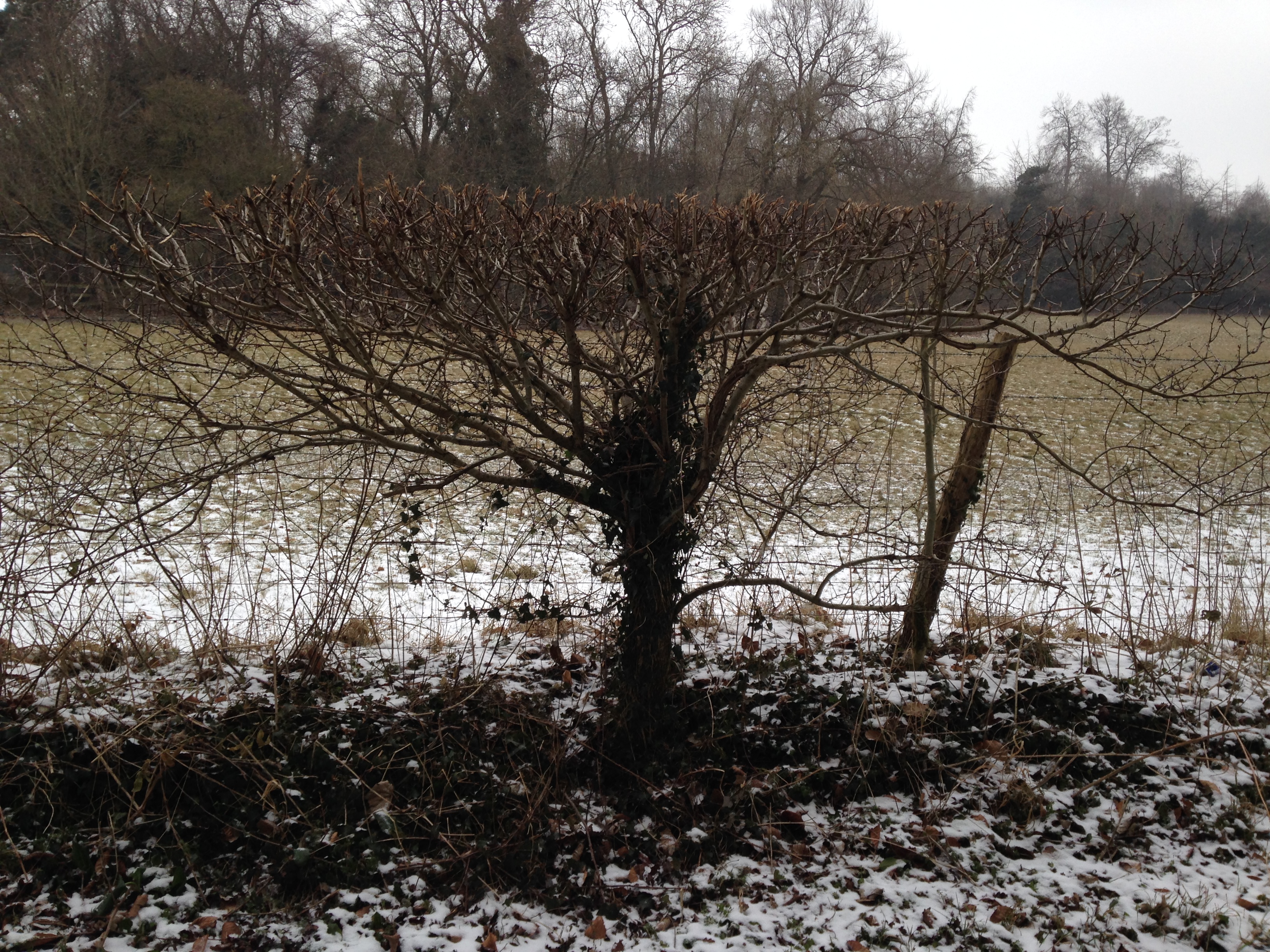
It’s important to maintain hedgerows in good condition however. Annual cutting at the same height every year stresses plants resulting in thick stems and a hard knuckle of regrowth which cracks and splinters under a flail which looks unsightly and may contribute to exposing plants to disease and decay. Annual cutting leads to gappy hedgerows as plants disappear from the hedge, like in this ‘candelabra’ hawthorn along Chapel Road in Westhumble, Dorking. Equally, non intervention leads to tree lines and eventual disappearance of hedgerows.
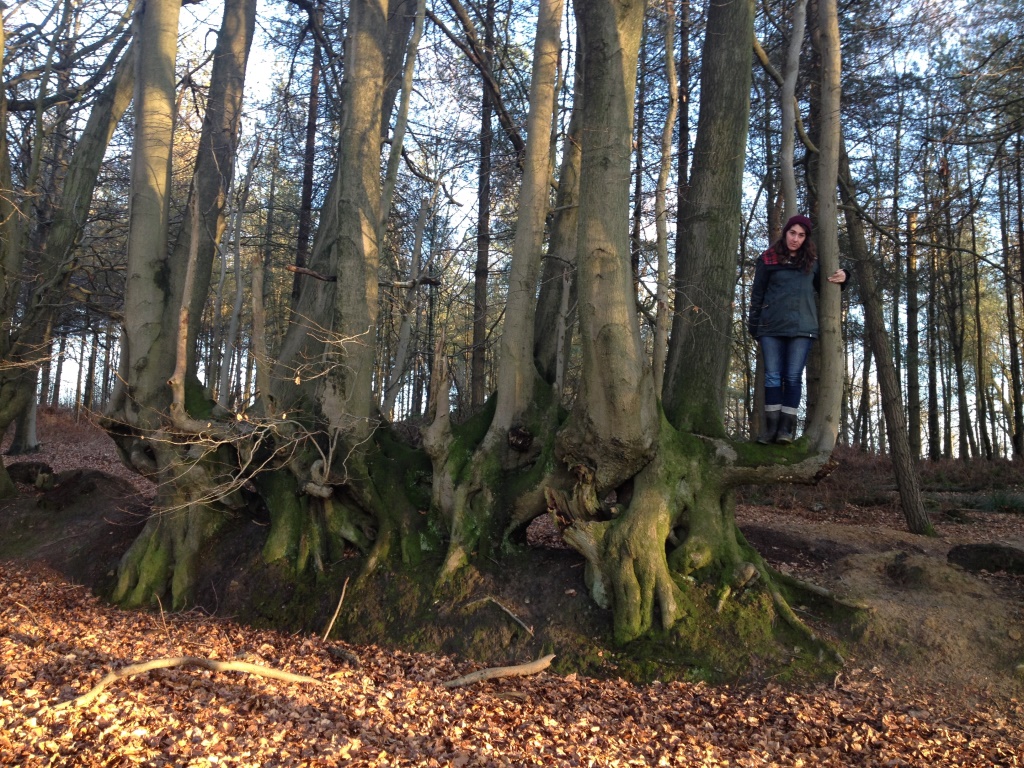
I suggest a balance needs to be set between the need to preserve the hedgerows and hedge networks itself versus the needs of the species that occupy it/them. There is a point in the (The Hedge Management Cycle, (see also Hedgelink website) where a hedgerow reaches Point 10- line of trees, and is managed as such for biodiversity and socio-ecological benefits. There are some old beech hedges in Surrey at Haslemere and Hindhead and on Leith Hill which still retain the old pleachers fused together at the bottom of huge mature beeches. These amazing relics are part of the story of our landscape history and while I wouldn’t prescribe ‘no intervention management’ to all hedgerows its important to allow space for such features to emerge, both for wildlife and people. Its only by planning at the landscape scale and over time can you assure the heterogeneity Graham et al recommend.
For more information about hedgerow management visit the Hedgelink website http://www.hedgelink.org.uk
 James T Jones
Leave a comment