
At the end of a splendid week on the road with my Canadian friend Andrew Millward visiting the Black Mountains College (see previous post) we connected with my old buddy Nigel Adams in Oxford. Nigel took Andrew and I for a days hedge-laying in Henley. It was supposed to be two days, but at Nigel’s last-minute request we found ourselves heading back to Wales, to a small village near Mold, Flintshire called Gwernymynydd where the Flintshire Farmers Association were holding their annual Hedgelaying Competition. We weren’t there to take part, but instead to interview and take pictures for Nigel’s upcoming book on Hedgelaying. I would have loved another day’s hedgelaying, but as a Tolkien fan I’m wary of refusing invitations for adventures- with an undertone of ‘mission’- from bearded old men. Not that Nigel is very beardy, or even that old, but he was the person who called me one day in 2016 and asked something like “‘Do you know any hedgelaying-scientist type who wants an all expenses paid trip to Canada to talk about hedgerows and demonstrate hedgelaying to the North Americans?” That tale is told here.


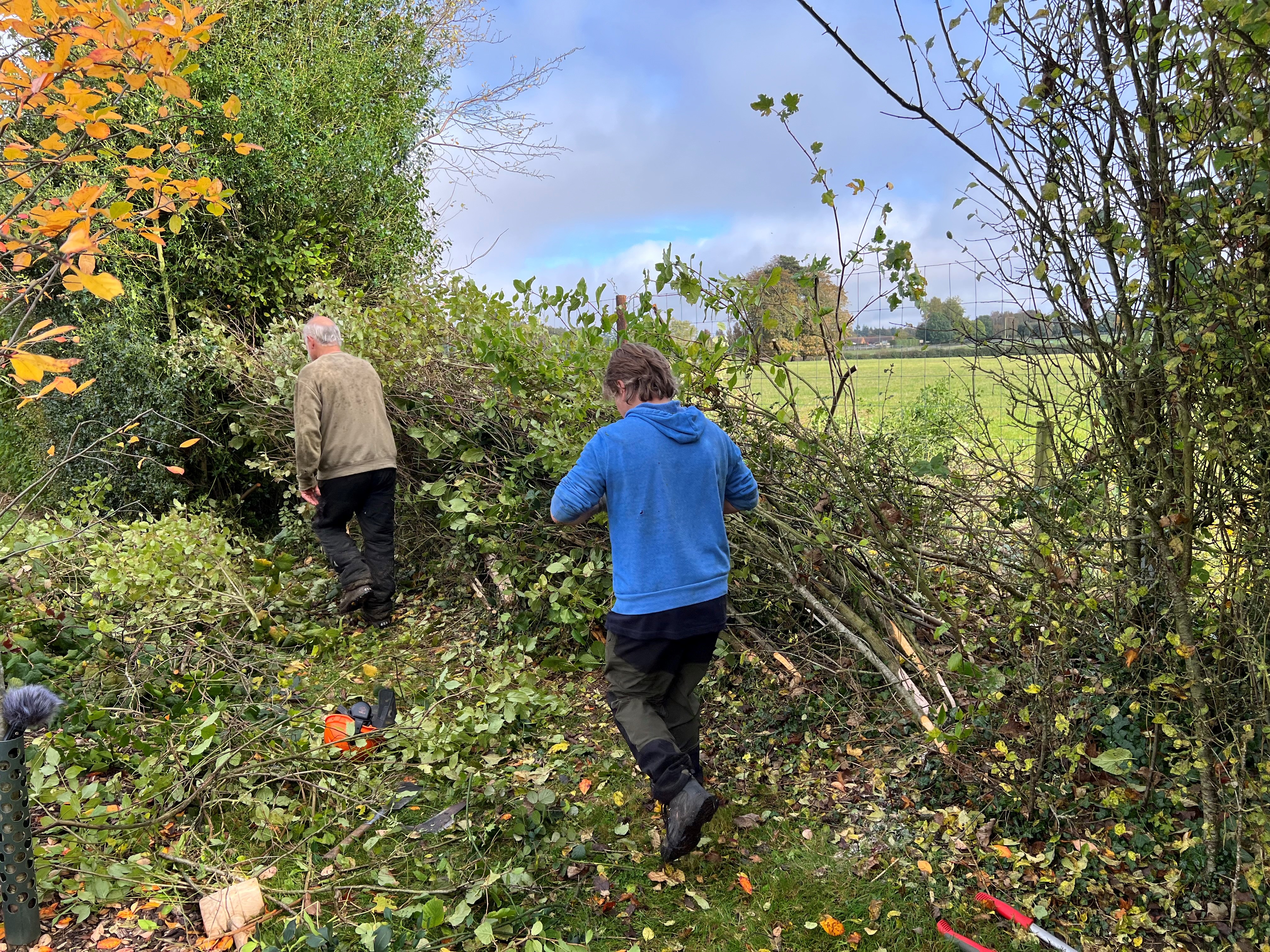


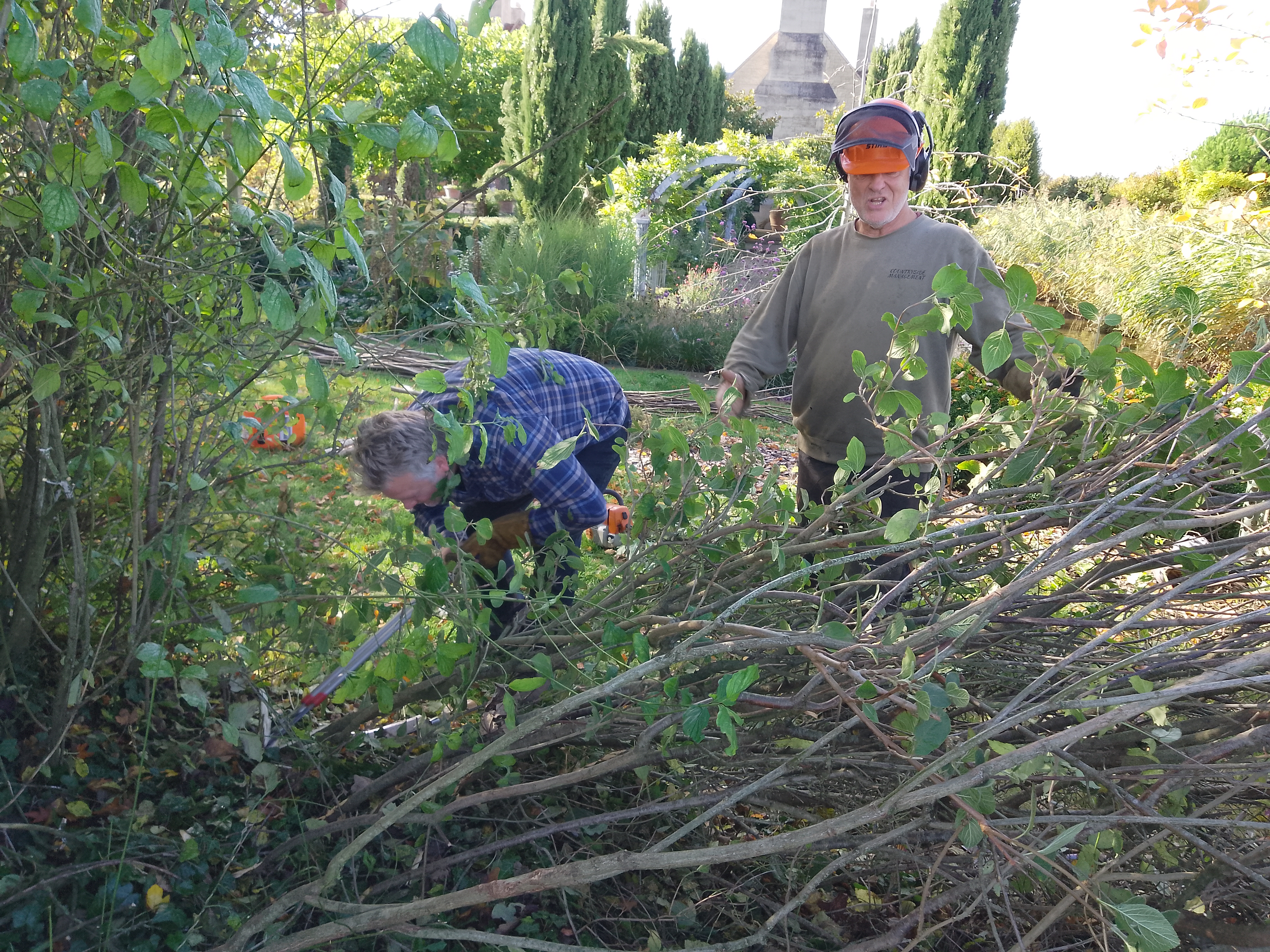
Our trip to Gwernymynydd is a tale in itself, fraught with late risings; a side quest to film sheep with a drone that made us arrive just as the competition was ending; a drop off for Andrew in Chester to get the morning train to the University of Stirling for a teaching appointment; and on the way back an urgent diversion guided by Google Maps to the nearest fish and chips shops in an estate in Runcorn, a glorious Hunter’s Moon and long conversations about geopolitics.

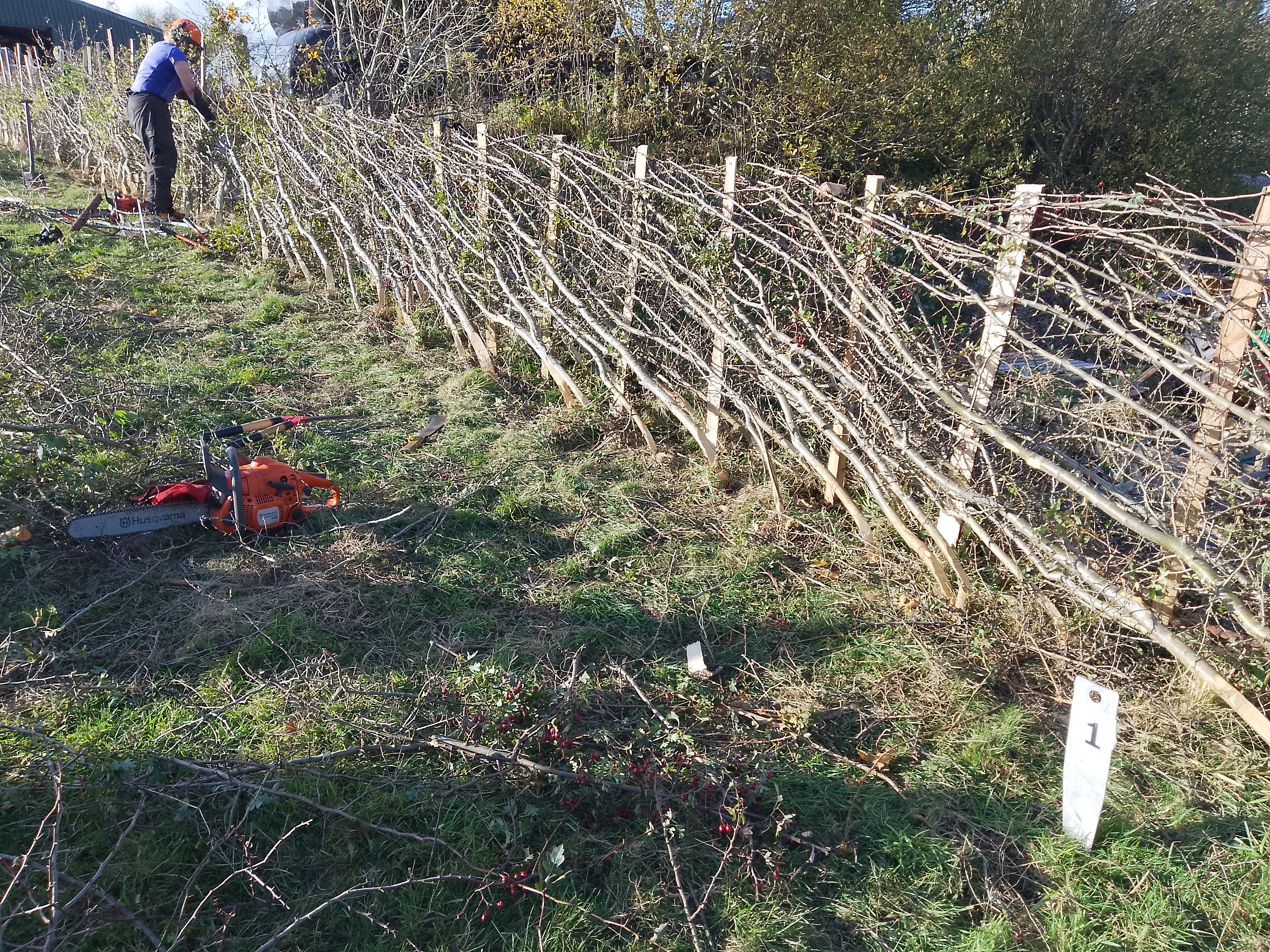


I had a buzz as soon as I stepped out of the car. The farm where the competition was being hosted-Bryn Ffynnon (“Hill Spring”)- is perched on the eastern slopes of the Clwydian range, in the catchment of the River Dee. The view from these well-grazed slopes out across the Dee and the Mersey estuaries on the bright autumn day is nothing short of spectacular, even with the local cement factory doing its best to mess things up. Hedgelayers and the now-layed hedgerow cast long shadows in the sun. The Flinsthire hedgelaying style is sparse and low, well- suited to the needs of sheep farmers, and uses split stakes and no feathering to bind the hedge together. It fits the landscape perfectly. The level of skill on display was very high, and it left me with a hankering to add to the tally of the one hedgelaying competition i have attended with the South of Engand Hedgelaying Society in 2017.
There is something else. To the west is Moel Arthur and I am reminded of a story from my Dad of letters from home during his national service training with the RAF on those slopes, that reminded him that this once WAS home. His grandfather David Jones had been born in 1878 in the village of Llangynhafal which sits between two tributaries of the river Clwyd on the western slope of Moel Llys-Coed, a peak between Moel Arthur and Moel Famau. His father Thomas Jones, my great great grandfather had been born in Bagillt in 1853, a village four hours away on foot on the Dee estuary. His father John Jones, was born in 1813 in Caerwys, 3 hours from Bagillt and in 1791, his father William Jones was born in the Parish of St Asaph 2.5 hours from Caerwys. I haven’t been able to trace back further than this but it doesn’t seem unreasonable to expect this localised pattern of ancestry to continue back into the past, making this patch of North Wales seem a significant place for my ‘clan’.


I listened in to Nigel’s conversations with some of the hedgelayers as he tried to develop an understanding of the way the Flintshire hedging style had developed, although most of the conversations were as sparse in detail as the hedge is in structure. I listened more intently as the discussion with two local(ish) hedgelayers turned more to the the teaching of land skills and the preservation of traditions for future generations. I won’t relate the details in fairness to Nigel and his research, but I would have liked the same interview for my own investigations.
Its wonderful that there is a demand for and supply of land skills like these to new generations. At the competition, I spoke to two young people who worked in local conservation roles and who had taken up hedgelaying as a hobby, which goes against the story of increasingly urban and ‘virtual’ lifeways. At Black Mountains College, the students are actively pursuing careers in land based livelihoods, whatever that term may mean to them. However, only one of the two interviewees I mentioned above was a full-time land manager. There really needs to be an injection of imagination into how those of us who want to pursue a land-based livelihood have the opportunity to do so, without becoming trapped into narratives of unsustainable and non-regenerative economies.
It feels to me that there has been a wave of interest in back-to-the-land livelihoods in the last 10-20 years. My own experience in Canada in the last 7 years of organising and attending landskills workshops and events with attendees from across generations at various stages of reconnection with the land bears that out. Some people just want to try their hand at spoon carving; others are preparing for a future where they might find a piece of land to work; others still have been working farms or homesteads that have been in families for generations. There are still more that are very happy urbanites who love crafting and working with natural products. Amongst all these folk there are also varying attitudes to technology.
This is not a new trend. There has been a long history of back-to-the land movements, or more broadly agrarianism, found across the globe, played out in civilizations in crises as far back as Greece and Rome and more recently in Latin America and India. Europe is peppered with protests to the erosion of rural life especially in the last 200 years from the Swing Riots of the 1830s to the “Land and Livelihood” march by the Countryside Alliance in 2002. In the UK we were encouraged to Dig for Victory in WW2. In his excellent book New Pioneers: The Back-to-the-land Movement and the Search for a Sustainable Future , Jeffrey Jacob describes the historical waves of back to the land movement in the US: Thomas Jefferson encouraging stewardship and self-denial amongst smallholders during the Revolutionary War; during the 1920s Theodore Roosevelt convened the Countryside commission which revived agrarian sentiment; then in the 1960s and 70s back-to-the-land became part of the counterculture, the resistance against capitalist-socialist polarities when neither way offered an answer to alienating technology and industry.
Thinking about regenerative pathways to a future where we are living within the earth’s capacity to support us, we need to give space to stories that reconnect us to the natural world. There isn’t one hegemonic narrative that can define our relationship to the natural world, but there are underlying values we can choose to act as guiding stars to shape patterns in the narratives that constellate our lives such as ecocentrism, gratitude, and service.
In my research I have been exploring the narratives amongst local people in Ontario with a broadly land-based livelihood. I’m looking for patterns in their narratives that may indicate whether this is something we have seen before, or something new. Could it be a response to collapse, a millennial urge to renew connection, or nothing more than the resolution of local and immediate contingencies. Most importantly, if these are narratives that at last some of us want to see more of, how do we use our imagination to make that work?
 James T Jones
Leave a comment